


Trying to decide whether to buy a new car or fix up the old one?
Whether its a starter, water pump, new belts or even a transmission repair, that periodic repair bill is usually a drop in the bucket compared to monthly payments on a new car. When your car is still in good shape, paid for, and needs only modest repairs, it is that time known as the "Cinderella Era", that magical time when your car is paid off and repair bills are not too high.
A few large repair bills in a year or maybe one or two large ones can really make you think it is time to get rid of that car. But is it? There are a lot of factors to consider. It is almost always less expensive to repair a car than buy a new one.
First, to put it in perspective, total the repair bills for the last year or two and then divide that figure by the number of months. If that amount a month is more than half of new car payments, it may be time to replace it.
Remember though, you can't include oil changes, tires, brakes and normal maintenance into that figure because you will have similar expenses on a new car.
A lot of time someone hit with an occasional large repair bill are very surprised to see, when averaged out by the month, repairs may only be $30 - $60 a month. A typical new car is around $28,000; that's about $475 a month for five years after 20% down.
That's $5,700 a year in car payments alone, not including depreciation and an increase on insurance. You might find that you are not really driving the "money pit" you thought.
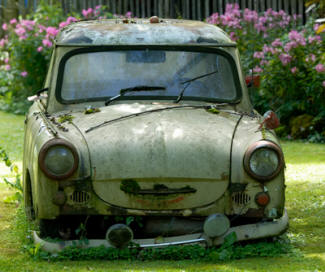
Although something as severe as a bad engine or transmission will run you between $3,000 and $7,000 it still may be not enough to buy a new car.
Other factors to consider though is gas mileage, if you do a lot of driving and have a gas hog, increased mileage in a new car might swing that another way. Peace of mind is also a factor that a new car can bring. Newer cars usually have more safety related items also. If the car is constantly breaking down and unreliable, it may not be worth keeping either.
Something to keep in mind is the value of your car is not always what you could sell it for, but what it would cost to replace it.
Buying a used car will save you that huge deprecation cost at the start, but you may end up with someone else's problems. See our tips on buying a new or used car.